A Trek is Not a Climbing Trip
Whether you begin your trek at a roadhead or fly into a remote mountain airstrip, a large part of it will be in the Middle Hills region at elevations between 500 and 3000 metres. In this region, there are always well-developed trails through villages and across mountain passes. Even at high altitudes there are intermittent settlements used during summer by shepherds, so the trails, though often indistinct, are always there. You can easily travel on any trail without the aid of ropes or mountaineering skills. There are rare occasions when there is snow on the trail, and on some high passes it might be necessary to place a safety line for your companions or porters if there is deep snow. Still, alpine techniques are almost never used on a traditional trek. Anyone who has walked extensively in the mountains has all the skills necessary for an extended trek in Nepal.
Though some treks venture near glaciers, and even cross the foot of them, most treks do not allow the fulfilment of any Himalayan mountaineering ambitions. Nepal's mountaineering regulations allow trekkers to climb 18 specified peaks with a minimum of formality, but you must still make a few advance arrangements for such climbs. Many agents offer so-called climbing treks which include the ascent of one of these peaks as a feature of the trek. There are a few peaks that, under ideal conditions, are within the resources of individual trekkers. A climb can be arranged in Kathmandu if conditions are right, but a climb of one of the more difficult peaks should be planned well in advance.
A Trek Requires Physical Effort
A trek is physically demanding because of its length and the almost unbelievable changes in elevation. During the 300-km trek from Jiri to Everest base camp and return, for example, the trail gains and loses more than 9000 metres of elevation during many steep ascents and descents. On most treks, the daily gain is less than 800 metres in about 15 km, though ascents of as much as 1200 metres are possible on some days. You can always take plenty of time during the day to cover this distance, so the physical exertion, though quite strenuous at times, is not sustained. You also can stop frequently and take plenty of time for rest.
Probably the only physical problem that may make a trek impossible is a history of knee problems on descents. In Nepal the descents are long, steep and unrelenting. There is hardly a level stretch of trail in the entire country. If you are an experienced walker and often hike 15 km a day with a pack, a trek should prove no difficulty. You will be pleasantly surprised at how easy the hiking can be if you only carry a light backpack and do not have to worry about meal preparation.
Previous experience in hiking and living outdoors is, however, helpful as you make plans for your trek. The first night of a month-long trip is too late to discover that you do not like to sleep in a sleeping bag. Mountaineering experience is not necessary, but you must enjoy walking. Nepal treks allow you to experience the Himalayan countryside and to meet the people of the hills with a minimum of formality and preparation. If you follow the suggestions here, you will have all the equipment and permits you need to enjoy your trek. Read this information carefully so that you will know what to expect when you arrive in Nepal.
If you are not joining a group trek, you will not have a professional trek leader. If there are more than 3 or 4 people in your party, one of you should assume an informal leadership position to act as spokesman for the group both in Kathmandu and on the trail.
There are many preparations that you can make before you depart for Nepal. Most important are your clothing and trekking equipment, medical supplies, your passport and a visa for Nepal. While some of these projects can be postponed until the last minute (by getting a visa at the airport in Kathmandu or renting your trekking equipment in Nepal, for example), it is recommended that you make most preparations in advance so that you do not waste time during your holiday satisfying bureaucratic formalities or searching for some item of equipment that is temporarily unavailable for rent in Kathmandu.
You can obtain a visa before you come to Nepal or upon arrival in Kathmandu. You need only to fill in a form and pay a fee (in US dollars cash only), but it takes a bit of time at the airport after you arrive. To obtain a visa for Nepal in advance, write to one of the addresses below for instructions and a form. Fill in the form and return it with the appropriate fee, photos and your passport. If you are making a side trip to India or Tibet and then returning to Nepal, be sure to get a double entry visa. Your passport with a visa stamped in it should be returned to you by mail.
The visa regulations for Nepal are a bit complex. You need to decide what kind of visa to purchase depending on how long you plan to stay in Nepal. Visa fees are:
- 60-day single-entry: US$30
- 60-day double-entry: US$55 (useful if you are making a side trip to Bhutan or Tibet).
- 60-day triple-entry: US$70
- 60-day multiple-entry: US$90
If you have already visited Nepal within 150 days of the same visa year you must pay US$50 for 30 days.
Visa extensions cost US $1 for each day beyond the expiration date of the original entry visa.
Other Documents
Some other items that you should carry are:
- Your passport and extra photographs
- A vaccination certificate and record of medical history
- Your insurance form (especially insure your camera)
- Travellers cheques (carry a minimum of cash)
- A US$100 bill to be used for emergencies while trekking
- A photocopy of your passport (in case of loss)
Trekking Permits
Trekking permits are no longer required for treks to the Everest region, Annapurna and Langtang.
A trekking permit is still required to visit restricted areas and far eastern and western Nepal. The permit specifies the places you may visit and the duration of your trek. It requires one full day to obtain a trekking permit and involves a lot of queuing and waiting in the Immigration Office unless your agent obtains the permit for you. The cost of the trekking permit is usually included in the trek cost. If you are going to a place where a permit is needed, your travel schedule should include two nights in Kathmandu or Pokhara before the trek so that your trekking permit may be processed. You should keep your passport and air ticket in your hotel safe in Kathmandu during your trek.
A normal trekking permit costs US$5 per week for the first four weeks of trekking and US$10 per week thereafter. Permits for Dolpo and Kanchenjunga treks cost US$10 per week for the first four weeks and US$20 per week thereafter. The exorbitant fees for restricted-area trekking permits are detailed in the section on restricted areas. You must have a valid visa extension for the full period of trekking before you can apply for a trekking permit
National Park & Conservation Fees
If you trek in the Annapurna, Makalu or Kanchenjunga regions, you will enter a Conservation Area and must pay a conservation fee of Rs 1000 (Rs 2000 for Annapurna). This must be paid in advance in Kathmandu. A national park fee of Rs 1000 is also collected at the time you enter a national park.
 English
  Spanish
 Russian
 Farsi
Farsi Arabic
 French
 Turkish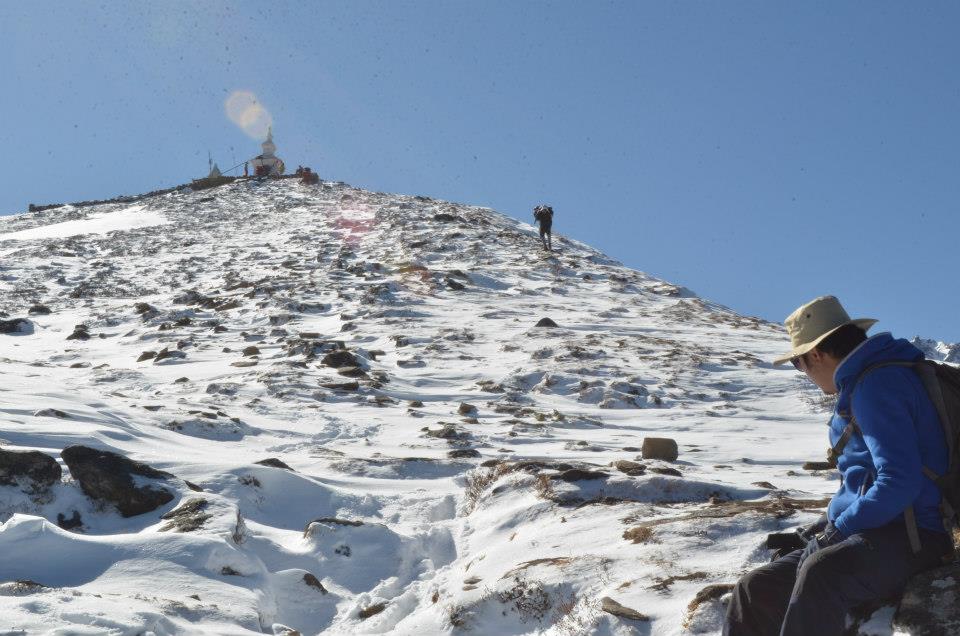








 PHPTRAVELS